Feeding community cats right: A vet's advice
A community cat feeder's real questions, answered by Dr. Roxanne Ignacio (resident vet ofJads4 Animal Clinic and vet ambassador of Prof. Bengal): feeding schedules, all-life-stage nutrition, and catching FIP early.
ANIMAL WELFARE
7/24/20264 min read
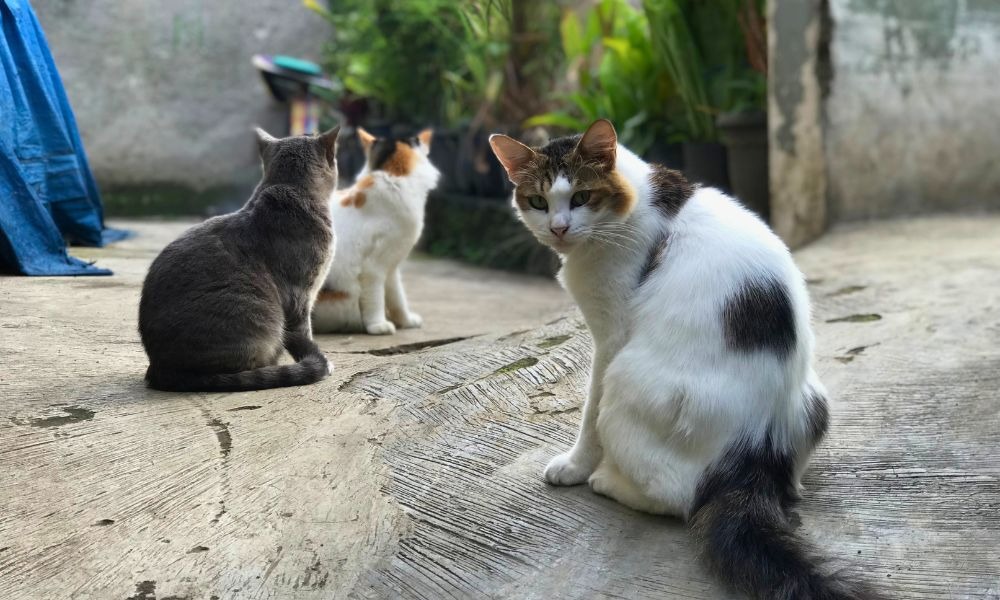

I didn't set out to become one of the people who feeds the cats in my village. It just happened — a few of us noticed the same strays showing up in the same spots, started leaving food out, and eventually fell into an unofficial routine with two or three neighbors who felt the same pull. Now it's part of my day: filling bowls before work, checking who's around, noticing when someone new turns up or someone familiar doesn't.
What I didn't have, for a long time, was any real guidance. I was going off instinct and whatever I'd picked up from other feeders — not always the same thing as what's actually good for the cats, especially with a group that ranges from tiny kittens to cats old enough to have earned a name and a personality. So I brought my actual questions to Dr. Roxanne Ignacio, resident veterinarian at Jads4 Animal Clinic and veterinary ambassador for cat wellness brand Prof. Bengal. Her answers, below, exactly as she gave them.


How often should community cats be fed?
Dr. Roxanne: A steady routine matters more than the exact number. For a mixed group, feeding twice a day at the same times and places works well, since cats are creatures of habit and a predictable schedule keeps them calm and easier to watch over. The kittens need more frequent, smaller meals, so if you can add a midday feeding for the little ones, that really helps them grow. Give what they can finish in about half an hour, then clear away the leftovers so the food does not spoil in the heat or attract ants and other animals. Fresh, clean water at every spot is just as important as the food.
That midday feeding for kittens was the one piece I'd been missing. Twice a day had become habit for me, but I'd never split it out for the younger ones.
What's the best food and supplements for a colony that ranges from kittens to seniors?
Dr. Roxanne: When you are feeding many cats at once, the practical choice is a good complete-and-balanced food labeled for all life stages, since one bowl then safely covers everyone from the kittens to the seniors. The very young kittens do benefit from a kitten formula when you can offer it separately, or you can soften the same food with a little warm water so it is gentler on them. Wet food is wonderful when the budget allows because it adds moisture, which is good for their kidneys and urinary health, but a quality dry food kept clean and fresh is perfectly fine day to day. On supplements, the simplest support that benefits every age is something for their immunity, since community cats face more stress and exposure than a house cat. A daily immune support like Prof. Bengal Pro Immune paste treat can be mixed into their food to give the whole colony a little extra help. Always introduce anything new slowly, and check with a vet if a cat has a health condition.
I'd assumed the kittens needed a completely separate setup from the older cats. Knowing one all-life-stages food can cover the whole group, with the kitten formula as an optional add-on, simplifies a lot of what we're already doing.
How can we best avoid and manage FIP in community cats?
Dr. Roxanne: Let me explain what FIP is first, since a lot of owners haven't heard of it. FIP stands for feline infectious peritonitis. It develops in a small number of cats after they pick up a very common gut virus called feline coronavirus, which spreads mainly through shared litter and feces. Most cats that carry that virus never get sick from it, but in a few it turns into FIP, which is the serious one. So you cannot completely prevent it, but you can lower the risk by keeping things clean and calm. In practice that means cleaning the feeding and toileting areas often, not letting the cats get overcrowded, and giving them enough space, good nutrition and low stress, since stress is a big trigger. If a new cat turns up, a short separation before it mingles with the rest helps. The encouraging part is that FIP is far more treatable today than it used to be, as there are now antiviral treatments that have saved many cats. So if you notice one with a swollen belly, a fever that will not go away, weight loss or unusual lethargy, please bring it to a vet early rather than waiting. Early attention makes the biggest difference.
This is the one I needed most. We've lost cats before without knowing why, and I'd never heard the term FIP until I asked. Now I know what to actually watch for — and that catching it early, rather than assuming the worst, is what gives a cat a real chance.
None of this requires a shelter, a budget most of us don't have, or some grand rescue plan. It's a midday bowl for the kittens, one bag of food instead of three, and knowing that a swollen belly is worth a vet visit instead of a guessing game. Tomorrow morning, I'll still be out there filling the same bowls at the same spots — just with a little more certainty about what I'm actually doing for them.
Dr. Roxanne Ignacio speaking at the Prof. Bengal launch last year
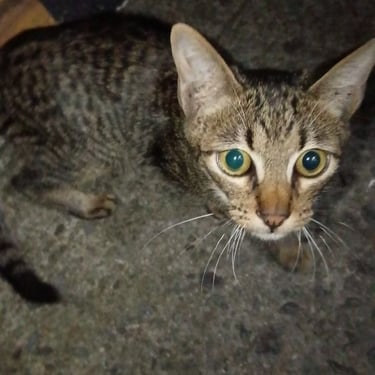
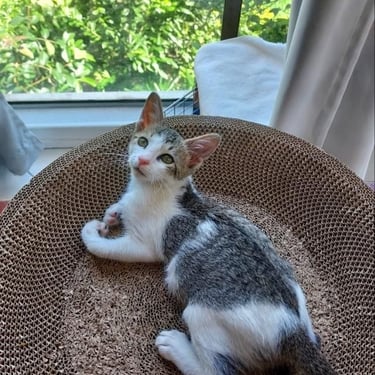

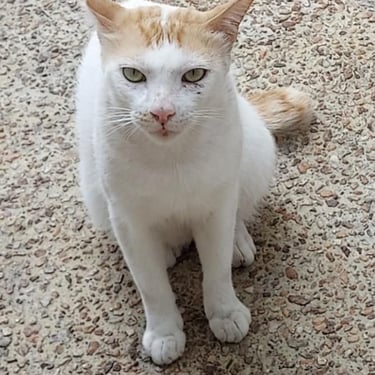
Just a few of our community cats here in Golf Hills (L-R): Smol Grey who made his appearance via the mango tree; Kid, a 3-month old kitten who is ready for his furever home; The Putis - a pair of white cat siblings who take up residence by the gate; and Jimmy Boy who patrols the wall and keeps Smol Grey and The Putis company.
Special thanks to Dr. Roxanne Ignacio and the Prof. Bengal team.
If you'd like to donate or adopt, or help support us feeding our community cats, please shoot us an email here at hello@ithappens.icu or DM @catsofgolfhillgardens on IG
Images: Bilqis Nur Amalia | Prof. Bengal