AIM Roundtable: Business growth is never a solo effort
AIM for Change brought business, government and academia together for a roundtable on ease of doing business in the Philippines — and made the case that growth only lasts when the whole ecosystem grows with it.
OP-ED
PJ Valenciano
7/20/20265 min read
Nature has always shown that growth depends on relationships, not individual effort. A tree doesn't grow on its own — it needs fertile soil, changing seasons, rainfall, microorganisms, insects and neighboring plants. Every element plays a part in an ecosystem that lets life adapt, regenerate and flourish. The branches and leaves get the attention, but the real work happens underground, in interactions no one sees.
Business works the same way. Companies get measured by innovation, profitability, expansion and market performance, but those outcomes grow out of environments built on trust, collaboration, education, sound public policy, infrastructure and strong communities. Growth isn't just good strategy or strong leadership — it's a reflection of the ecosystem that makes sustained progress possible.
AIM for Change turned that idea into a conversation, bringing in leaders from different sectors to test it against reality.
An executive roundtable on competitiveness
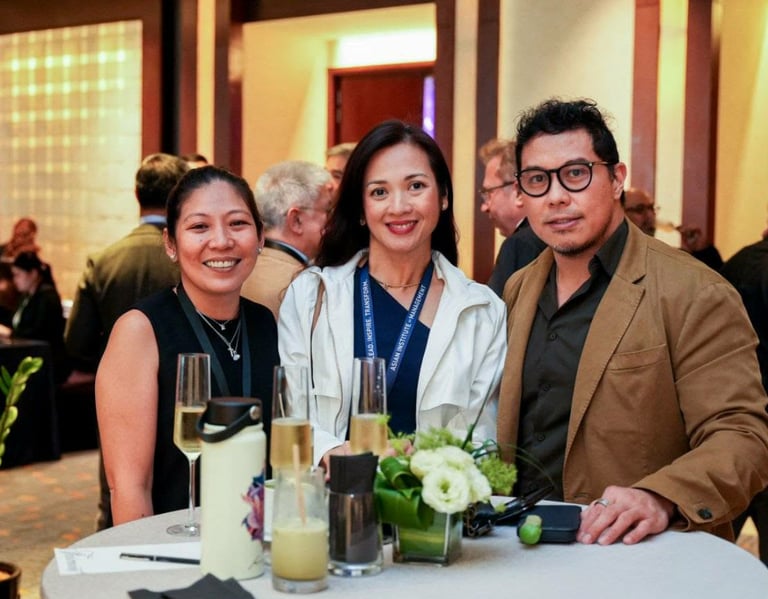
Hosted by the AIM Scientific Research Foundation Inc. through the Asian Institute of Management's Rizalino S. Navarro Center for Competitiveness, AIM for Change brought together leaders from business, government, academia, entrepreneurship and civil society for an Executive Roundtable on Ease of Doing Business in the Philippines. The event reflected a shared push to strengthen the country's competitiveness, and it gave sectors that don't often share a table the chance to talk to each other directly.
AIM President Dr. Jikyeong Kang opened the program, stressing the role of leadership and collaboration in navigating an increasingly dynamic business environment. Dr. Amando M. Tetangco Jr., former governor of the Bangko Sentral ng Pilipinas and chairman of SM Investments Corporation, delivered the keynote. Dr. Clarissa David, senior country officer of the World Bank, moderated the roundtable that followed.
The panel brought real range. Dr. Lilia de Lima drew on decades in investment promotion and economic zones. Rosanna Fajardo spoke from experience in organizational leadership and business consulting. Jack Madrid addressed the continuing role of the information technology and business process management industry in national competitiveness. Manny V. Pangilinan brought the perspective of someone who has spent years leading one of the country's largest business groups.
Rather than land on a single fix, the discussion kept circling back to how competitiveness gets built by institutions working together — business, government, academia, technology and public policy, each shaping the environment where innovation can take hold. Progress depends less on sectors moving in parallel and more on whether they're willing to work toward the same outcome.
Listening to those exchanges brought up another point worth sitting with: collaboration opens the door to change, but an open door isn't the same as a room full of people willing to walk through it. Change still has to be understood, embraced and carried forward by the people and institutions meant to sustain it.
From awareness to adoption
Organizations pour real effort into introducing change. Introducing it and getting people to actually adopt it, though, are two different jobs.
Change management treats awareness as a starting point, not a finish line. People need room to understand why a change matters, see how it touches their own work, ask hard questions, argue it out and figure out how to turn the idea into something they can actually do. Adoption builds slowly, through participation and shared experience — not through a single announcement.
The same holds for industries, institutions and communities, not just individual organizations. Ideas gain traction because people choose to carry them, sharpen them through use and fold them into daily practice.
Nature offers the clearest version of this. Every season sets up the next one. Seeds develop underground before anything visible appears. Roots keep spreading even when the landscape looks unchanged. What we see as sudden transformation is usually the tail end of work that had been happening quietly for a long time.
Ideas deserve that same runway.
Every organization belongs to an ecosystem
Across years of work in entrepreneurship, Fair Trade, advocacy, media, social enterprise and community development, one pattern keeps repeating: organizations differ wildly in purpose, size and structure, but none of them operate in isolation. They all sit inside ecosystems that stretch well past their own walls.
Entrepreneurs rely on customers, employees, suppliers, mentors, educators, investors, policymakers and communities. Schools train the professionals and business leaders who come next. Government sets the policies that encourage investment, innovation and responsible enterprise. Media gives ideas a way to reach a wider audience, and communities give those ideas somewhere to land.
Looking at business through that lens changes how success gets defined. Financial performance still matters, but lasting success also comes down to building partnerships, strengthening communities, backing innovation and creating room for others to grow. Healthy ecosystems hold up because value gets shared, knowledge moves around and resilience gets built together, not alone. Businesses have a real opening to build that same resilience by investing in relationships, not just results.
That's also why cross-sector conversations keep proving their worth. They put people with different responsibilities and different vantage points in front of the same problem. Every exchange offers another way to read a situation — and every one of them has a shot at shaping the decisions that come after it.
Building the conditions for growth
The conversations at AIM for Change came at the country's business environment from several angles, but they kept arriving at the same conclusion: better conditions for business take more than regulatory reform or economic policy. They also take trust between institutions, collaboration across sectors, investment in education, real openness to innovation and a willingness to learn from people outside your own lane.
No single organization can build those conditions alone. They show up when business, government, academia, civil society and communities recognize that their own success is tied to the health of the larger ecosystem they share. Seen that way, leadership isn't just about steering one organization toward growth — it's about building environments where other people get the chance to succeed, innovate and contribute.
The season after the conversation
An event takes up a few hours on a calendar. The conversations it starts tend to run much longer. Ideas leave the room with the people who carry them — into boardrooms, classrooms, government offices, community organizations and small businesses, where they get tested, reworked and eventually put into action. Like seeds, they need the right conditions to take. Awareness gets the process started; dialogue, trust and continued engagement are what let real change take root.
Nature keeps making the same point: every season sets up the next. Business runs on a similar rhythm. Lasting progress comes less from isolated flashes of change and more from the conditions that let ideas get understood, adopted and sustained.
AIM for Change made the case for bringing together voices that don't usually share a table. As the Philippines works through an increasingly complex economic landscape, those cross-sector conversations — business, government, academia, civil society — remain essential. Strengthening those connections strengthens the whole ecosystem that innovation, competitiveness and sustainable growth depend on.
The conditions built today decide what takes root tomorrow.
To learn more about the Asian Institute of Management's programs and initiatives, visit the AIM website.